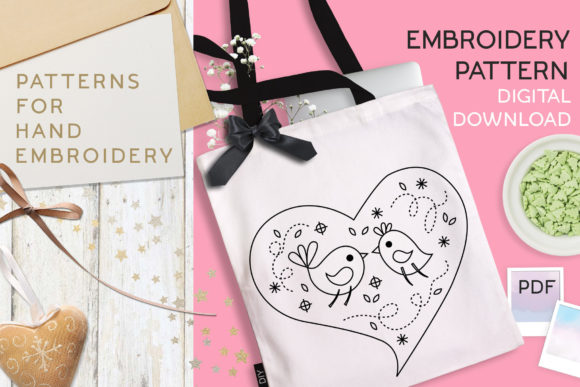
A Real Designer's Look at the Love Birds Embroidery Pattern
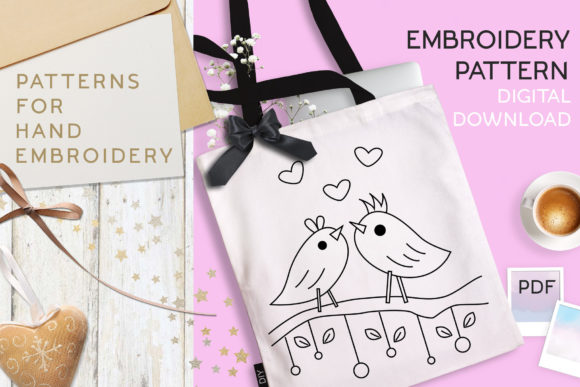
Let's talk about this Love Birds Embroidery Pattern from a practical standpoint. It’s a design I’d consider for a client project or for my own small shop merchandise. The romantic theme is clear—two birds, often a classic symbol of partnership. The first impression is one of sweet simplicity. It doesn’t scream complexity; it whispers charm. That’s a valuable starting point.
The Mood It Creates and Where It Belongs
The visual personality is gentle and approachable. This isn’t a dense, intricate scene. It’s a graphic with a likely straightforward layout, which means it creates a mood of warmth without being overly sentimental. For an embroidery project, this naturally belongs on items meant to convey affection or simple joy. I immediately picture it on a custom embroidered pillow cover for a cozy bedroom, a kitchen towel as a heartfelt holiday gift, or as a delicate accent on a baby’s blanket for nursery decor. Its uncomplicated nature makes it a strong candidate for personalized gifts where the stitching itself is the focus, not overwhelming detail.
Performance in Real Stitching Situations
Thinking about real-life use, this pattern's "simple and easy" description is its biggest asset. For hand embroidery, that translates to a manageable project, even for those running a craft business with tight timelines. I’ve evaluated similar designs for embellishing tote bags, and a clean, graphic pattern like this works beautifully. It stitches up quickly, providing good value for time invested, which is crucial for an Etsy seller or someone preparing for a craft fair.
On apparel, like a sweatshirt or t-shirt, a design like this needs careful placement. Its likely size and shape would sit nicely on a chest or sleeve without feeling bulky. For a boutique product, such as an apron or a cap, the romantic theme adds a touch of branded personality without being too niche. As a digital embroidery file for commercial embroidery, the simplicity suggests it would have clean stitch paths, but that depends entirely on the actual file details provided by the seller.
Where This Design Needs a Careful Hand
Even with a simple pattern, there are always considerations. On very small hoop sizes, the birds' features might lose clarity if the design isn’t scaled appropriately. On textured or stretchy fabric, like some sweatshirt materials, the outlines could distort without the right stabilizer. I’d be cautious about using it on very dark fabric if the thread color contrast isn’t planned well—a light, bright thread palette would be essential to maintain the design's cheerful feel.
For products needing frequent washing, like kitchen towels or baby clothes, the stitch density matters. A design that’s too sparse might not hold up as well over time. Also, on curved surfaces like caps, the symmetry of the two birds needs to be checked in a mockup to ensure it looks balanced from the wearer’s perspective. These aren’t flaws of the design itself, but rather practical notes for any embroidery designer putting it into production.
Impact on Your Project and Your Customer
Using a pattern like this affects more than just the stitch count. It affects visual appeal and customer trust. A clean, well-executed embroidery of a recognizable, pleasant theme like love birds enhances the handmade presentation. It feels professional and intentional. For a small shop product, it supports brand consistency if your niche is heartfelt, homemade goods. Its giftability is high—it’s a pattern people easily understand and appreciate.
This recognition directly boosts buyer engagement in an Etsy listing or at a fair. Customers can quickly envision it on a tote bag or a sweatshirt. That’s a win. However, the ultimate professionalism comes from your execution. The pattern provides the blueprint, but your choice of thread colors, fabric, and finishing will determine the final product's quality and perceived value.
Practical Notes Before You Hoop the Fabric
Before I’d ever run this Love Birds Embroidery Pattern for a client or my own merchandise, I’d follow a few standard checks. Always test the design on scrap fabric first, ideally a similar material to your final product. This reveals any issues with small details or stitch tension. Review the stitch density by looking at a finished sample—is it too open or too tight for your fabric?
Check thread color contrast meticulously. I’d even test the design concept in black and white mockups to see if the composition holds its shape without color. Compare how it might look on both light and dark fabric backgrounds. Use a proper stabilizer; don’t skip this step just because the pattern seems simple. Finally, and this is critical for any digital product seller or creative entrepreneur: confirm the licensing terms. Is this graphics file meant for personal use only, or for commercial embroidery projects where you sell the finished product? That information must be clear before you sell a single embroidered tote bag.
The Love Birds Embroidery Pattern, from its description, seems like a fun pattern for hand embroidery creations. That fun factor is important—it makes the embroidery project enjoyable for you, the maker, which often results in a better finished product. When you enjoy the process, that care translates into the item, whether it’s a custom apparel piece, an embroidered patch, or a holiday gift. It becomes more than just a design asset; it becomes a piece with genuine character.